
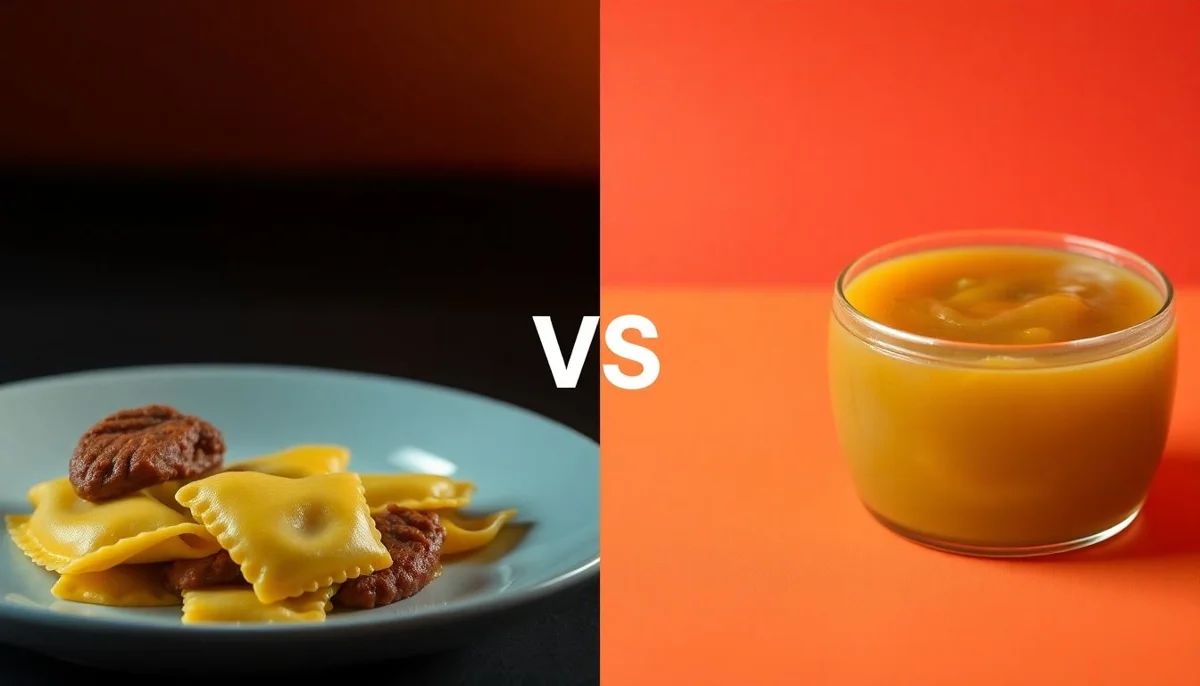
Ravioli vs Apple Sauce
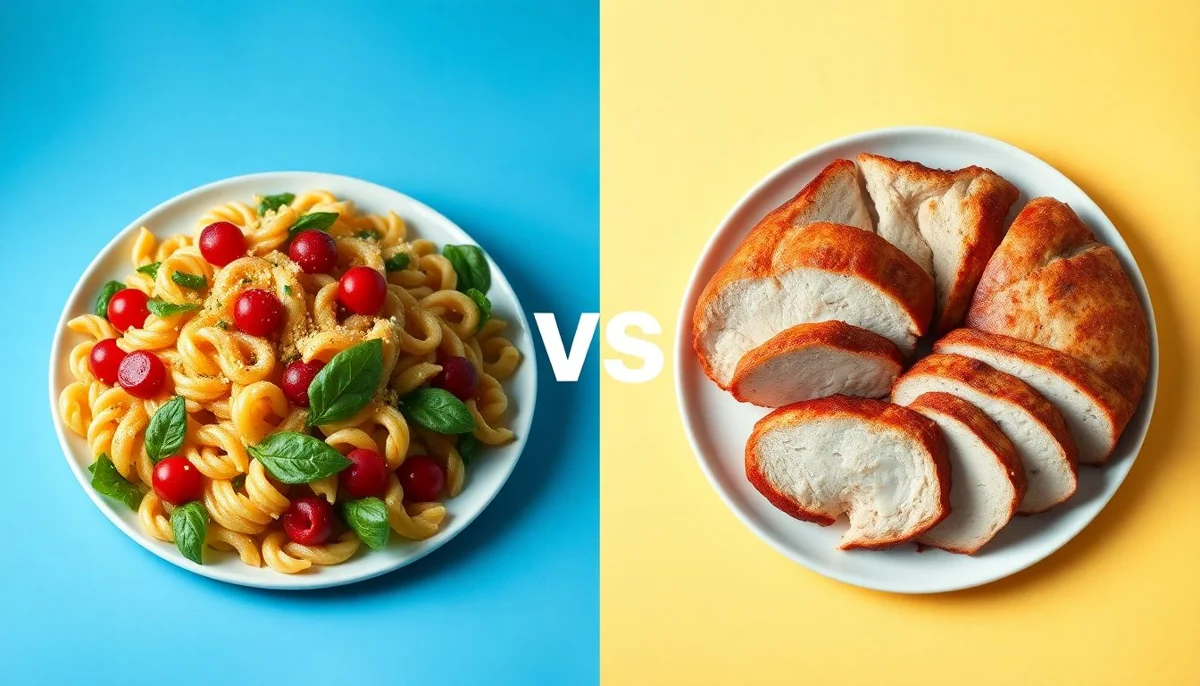
A hearty frozen pasta meal squares off against a simple fruit purée — one is savory comfort, the other a sweet, portable snack. Which is the smarter pick for dinner, lunchboxes, and nutrition goals?
Based on AI sentiment analysis
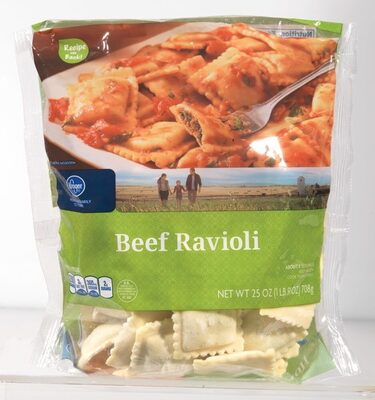
Beef Ravioli
Chef's Hacks
- Quick weeknight meal: Boil or pan-fry the ravioli and serve with a simple tomato-basil sauce and a handful of arugula for a balanced plate with added greens and acidity.
- Crispy ravioli appetizer: Lightly bread and pan-sear individual ravioli as a crunchy starter, serve with a zesty marinara or horseradish cream to contrast textures and highlight the beef-ricotta filling.
- Pasta bake: Layer cooked ravioli in a casserole dish with low-sugar tomato sauce, a sprinkle of extra romano and spinach, then bake briefly to meld flavors into an efficient family-style dinner.
Did You Know?
"Filled pastas like ravioli date back to medieval Europe and are believed to have originated as a practical way to combine meat, cheese and other fillings with dough; traditionally they were often made as a way to stretch small amounts of meat into many servings."
The Showdown
Pros & Cons
Beef Ravioli
- Good protein and savory satisfaction: The ravioli contains beef, ricotta, eggs and enriched durum wheat, providing a mix of protein and calories that make it a filling main-course option rather than just a snack.
- Texture variety and complexity: The combination of tender pasta, meat filling, and cheese produces a layered mouthfeel with chew, creaminess, and hearty density that many people find more satisfying than a simple purée.
- Flavor depth from seasonings and beef sirloin seasoning: The ingredient list includes roasted beef sirloin, garlic, and other seasonings (including autolyzed yeast extract) that deliver umami and meaty roast flavors that pair well with robust sauces and wines.
- Contains several processed additives and flavor carriers: Ingredients like modified food starch, guar gum, carrageenan, maltodextrin, corn syrup solids and caramel color increase processing and introduce substances some consumers avoid.
- Salt and sodium likely high (label incomplete): The presence of multiple cheese, seasoning blends, and beef juice concentrates plus processed flavorings implies a significant sodium load compared with whole-food options.
- Higher fat and cholesterol than the fruit option: With beef, ricotta and eggs present, the product supplies saturated fat and 34 mg cholesterol per serving, which can be a downside for those monitoring lipids.
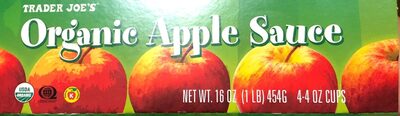
Organic Applesauce
- Very short ingredient list: Made with organic apples and organic natural flavor, which reduces exposure to long lists of industrial additives and simplifies ingredient transparency.
- Low fat and low calorie density: The applesauce’s nutrition shows negligible fat and very low energy compared with the ravioli, making it a reasonable low-calorie snack or dessert when portion-controlled.
- High fruit content: The product reports a very high fruits-vegetables-legumes estimate (~97.5 per 100 g), so you’re getting actual fruit-derived nutrients like vitamin C and fiber from apples (depending on processing).
- High simple carbohydrate content: With ~19 g carbohydrate per serving/100 g (mostly sugars from fruit) the applesauce can spike blood sugar and provides little protein or fat to slow absorption.
- Ambiguous 'natural flavor': Even though it’s organic, the vague 'organic natural flavor' term hides composition details and can include concentrated extracts or processing aids some consumers prefer to avoid.
- Limited satiety and nutrition as a standalone meal: The applesauce is light and quick to eat; without protein or fat it won’t satisfy hunger for long and is best as a complement rather than the main course.
Flavor Profile
Flavor & Texture
Ingredient Quality
Nutritional Value
Value Verdict
A Better Alternative?
Unsweetened homemade applesauce — making applesauce at home from whole apples with no added sugar or opaque 'natural flavors' is a healthier alternative because it minimizes processing, preserves more fiber when skins are kept on, and eliminates added stabilizers and flavor carrier ingredients; it also allows you to control texture and seasonings (e.g., cinnamon) while keeping calories and additives low.
If both A and B are disappointing, our experts recommend this healthier swap.
Make it a Meal
Try pairing the winner with Light tomato-basil sauce with shaved Parmesan and arugula
"A simple tomato-basil sauce provides bright acidity and herbaceous freshness that cuts through the ravioli’s cheese and beef richness, while shaved Parmesan echoes the cheese notes inside and adds savory depth. Peppery arugula adds a bitter, crisp contrast and a leafy texture to balance the ravioli’s tender pasta and creamy filling. The combination refreshes the palate between bites, enhances umami through complementary cheeses, and creates a balanced plate of acid, fat, protein and greens."
Buy Light tomato-basil sauce with shaved Parmesan and arugulaFinal Conclusion
Both products serve distinct roles: the Beef Ravioli is a savory, protein-containing convenience meal with complex flavor, layered textures, and a more complete macronutrient profile that suits lunch or dinner when you need satiety and taste. However, it carries tradeoffs in the form of processed additives (stabilizers, flavor concentrates, corn syrup solids), probable higher sodium, and saturated fat and cholesterol from the meat and cheeses. The Organic Applesauce represents the opposite end of the spectrum: a short, mostly whole-ingredient list and low fat make it a clean, low-calorie snack or dessert option, but the concentrated simple carbohydrates and lack of protein make it a poor standalone meal if your goal is sustained fullness. Nutrition-wise, applesauce is better for calorie control and ingredient simplicity, while ravioli is functionally better as a meal because of protein and savory satisfaction. Choosing between them depends on context: for a quick, nourishing dinner, the ravioli is a stronger choice; for a minimalist snack or a kid-friendly fruit serving, the applesauce wins. Consider pairing the applesauce with some protein or choosing smaller ravioli portions or lower-sodium accompaniments to get the benefits of both while minimizing downsides. Also, if you are sensitive to additives or digestive irritants, opt for simpler or homemade versions — homemade applesauce or a whole-grain, minimally processed filled pasta made with fewer stabilizers will generally be the healthiest route.
Share the Verdict
Help your friends eat smarter.
Frequently Asked Questions
Is the applesauce better if it contains 'natural flavor'?
Not necessarily. 'Natural flavor' can enhance aroma and flavor but is a vague term that doesn’t guarantee a minimally processed component; in organic products it’s limited to organic-sourced natural flavorings, but that still doesn’t disclose exact composition. If you want absolute transparency, look for applesauce that lists only 'apples' (and perhaps cinnamon) or make your own.
Should people with high blood pressure avoid the beef ravioli?
People monitoring blood pressure should be cautious because frozen and prepared pasta products that include cheeses, preserved meats, and seasoning blends tend to be higher in sodium. The ingredient list for this ravioli includes multiple salted components and seasoning blends, so unless the label explicitly shows low sodium values, it’s wise to limit portion size, rinse or pair with fresh, unsalted sides (greens, plain vegetables), or choose a low-sodium alternative.
Organic Applesauce
Chef's Hacks
- Snack or dessert with a protein lift: Stir the applesauce into plain Greek yogurt and top with toasted walnuts and cinnamon for a balanced snack with fat and protein to slow sugar absorption.
- Sauce or glaze for pork: Use the applesauce as a sweet-tart glaze for roast pork or pork chops, pairing the fruit’s acidity with savory meat for classic contrast.
- Breakfast topping: Heat and spoon applesauce over steel-cut oats or whole-grain pancakes with a sprinkle of chia seeds for extra fiber and omega-3s.
Did You Know?
"Applesauce has been used for centuries as an easy-to-digest food for children and the sick; in the 19th century, it was commonly prepared at home to preserve apples past the harvest using slow cooking and canning techniques."